- About
- Services
- Advocacy
- Support us
- News
- Publications
- Careers
- Contact



MCM provides expert in-home palliative care services 7 days a week in the cities of Hume, Merri-bek, Darebin and Yarra. Our client-centred care is available 24 hours a day, 7 days a week.
We provide specialist health care and practical support to people who have an advanced disease or life-limiting illness, their carers and families, ultimately aimed at enhancing quality of life.
At MCM, we provide expert symptom management and pay particular attention to physical, spiritual, social and cultural needs, ensuring that dignity and quality of life are at the forefront of everything we do.

Find out what supports we can provide to you so you have the best quality of life.
Read more
Find out about the supports we can help provide if you are caring for someone with a life-limiting illness.
Read more
Anyone can make a palliative care referral, providing the person receiving the care agrees.
Read more
Scroll through our library to find further resources to support you at this time.
Read more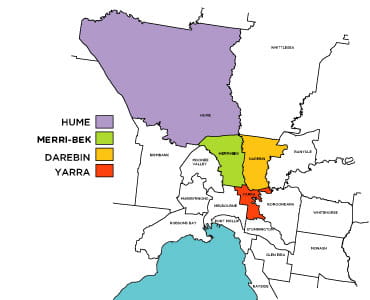 PROVIDING PALLIATIVE CARE SERVICES IN THE CITIES OF HUME, MERRI-BEK, DAREBIN AND YARRA
Our service is free of charge, but all donations are gratefully accepted.
|
Nursing and medical |
|
|
Care coordination |
|
|
Allied health |
|
Address: 230 Normanby Avenue, Thornbury Victoria 3071
Opening hours: Monday to Friday 8:30am to 4:30pm
Phone: 03 9977 0026
Fax: 03 9482 5094
Email: mcmpc@mcm.org.au